How to Certify a Copy of a Document in Australia
If you’re applying for a Centrelink payment, enrolling in Medicare, or dealing with Child Support, you’ll often be asked to provide a certified copy of an identity document, such as your birth certificate, passport, or driver’s licence. This guide explains exactly what that means and how to get your documents certified properly.
What Does It Mean to Certify a Document?
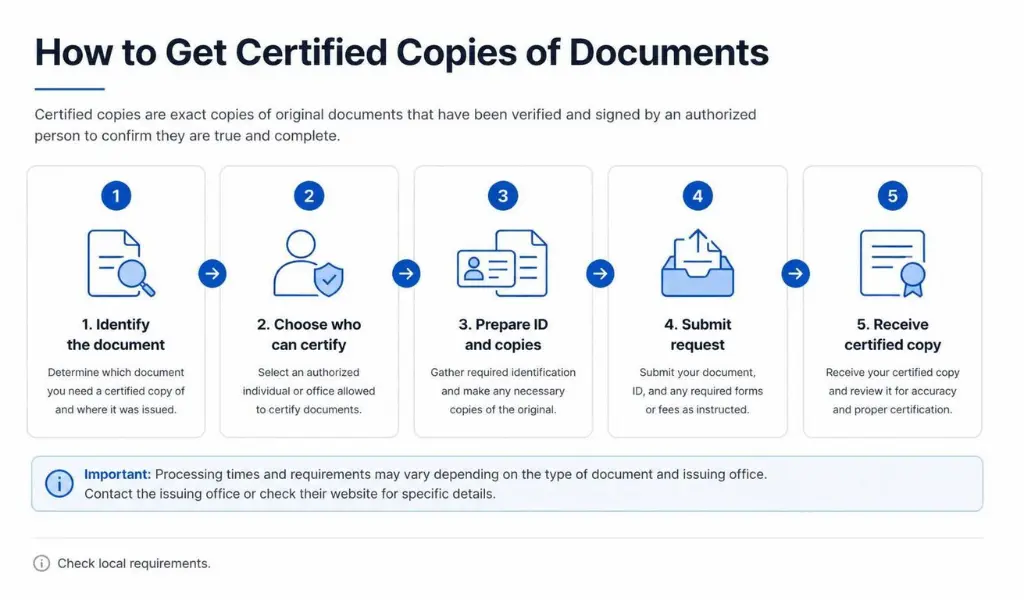
A certified copy is a photocopy of an original document that has been stamped, signed, and dated by an authorised person, confirming that it’s a true and accurate copy of the original. This process is used so you don’t have to hand over your actual original documents, such as your birth certificate or passport, when applying for government services.
When Do You Need Certified Copies?
You may need certified copies of your identity documents when:
- Applying for a Centrelink payment for the first time
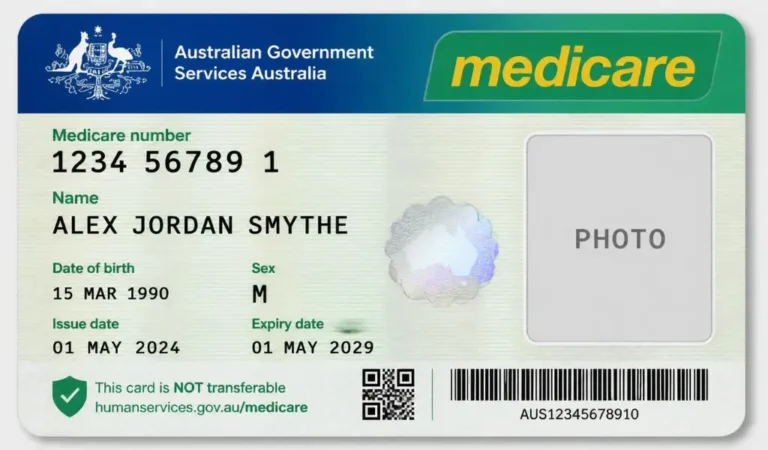
- Enrolling in Medicare, particularly as a new resident
- Setting up a Child Support case
- Applying for a Low Income Health Care Card or other concession card
- Providing identity documents that can’t easily be verified electronically
Not every application requires certified copies, some can be verified electronically, but it’s common enough that it’s worth knowing the process in advance.
Who Can Certify a Document in Australia?
A wide range of people are authorised to certify copies of documents, including:
- A Justice of the Peace (JP)
- A police officer
- A pharmacist
- A doctor or other registered health practitioner
- A lawyer or legal practitioner
- An accountant (in some cases, depending on their registration)
- A postal worker at an Australia Post outlet offering identity services
- A notary public
Exactly who qualifies can vary slightly depending on your state or territory, so if you’re unsure whether someone is eligible, it’s worth checking your state’s justice department website, or simply asking the person directly, since most authorised certifiers are used to the process.
How to Get a Document Certified: Step by Step
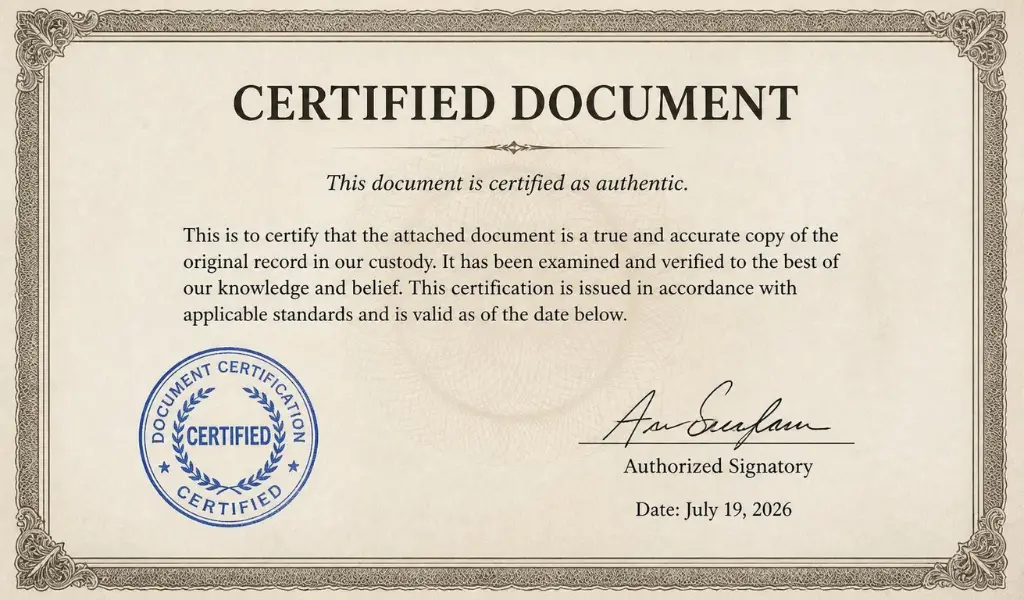
- Make a clear photocopy of the original document, front and back if relevant.
- Take both the original document and the photocopy to an authorised certifier.
- The certifier compares the copy to the original to confirm it’s accurate.
- They sign, date, and stamp the copy, along with a statement confirming it’s a true copy of the original.
- Some certifiers may also need to see your own ID to confirm who they’re certifying documents for.
You generally need a separate certified copy for each document you’re submitting, and some organisations require the certification to be relatively recent.
Where to Get Documents Certified for Free or Low Cost
- Australia Post offers a certified copy service at many outlets, generally for a small fee
- Justices of the Peace often provide certification for free through community JP services, such as those found at libraries or community centres
- Police stations may offer certification, though this can vary by location and availability
- Pharmacists and doctors can certify documents, though this may depend on their availability
Community-based JP services are often the easiest and most affordable option if you’re certifying multiple documents at once.
What Documents Commonly Need Certifying
- Birth certificate
- Passport (photo page)
- Driver’s licence
- Marriage certificate
- Change of name certificate
- Visa documents
Check the specific requirements of the application you’re submitting, since some services only need one or two certified documents rather than your entire identity file.
Common Mistakes to Avoid
- Certifying a copy of a copy – Always use an original document, not a photocopy, when getting something certified.
- Missing signature, date, or stamp – A certified copy is only valid if it includes all three from an authorised certifier.
- Using an outdated certified copy – Some services require certification within a certain timeframe, so check before submitting an older certified document.
- Certifying the wrong pages – For passports, this usually means the photo page specifically, not the entire booklet.
FAQs About Certifying Documents
Q: Do I need to pay to have a document certified?
Not always. Justices of the Peace often certify documents for free, while Australia Post and some other services may charge a small fee.
Q: Can a family member certify my documents?
No, the certifier needs to be an independent, authorised person, such as a JP, police officer, or pharmacist, not a relative or someone directly involved in your application.
Q: How long is a certified copy valid for?
There’s no universal expiry, but some organisations prefer certified copies from within the last 6 to 12 months, so check the specific requirements of your application.
Q: Can I certify documents online?
In most cases, certification requires an in-person comparison between the original and the copy, though some services now offer remote or digital certification through registered professionals.
Q: What if I don’t have access to a Justice of the Peace nearby?
Police stations, pharmacies, doctors’ offices, and Australia Post outlets are also common options, so you’re not limited to JP services alone.
Conclusion
Getting a document certified is a simple process once you know who’s authorised to do it and what they need to see. Whether you’re applying for Centrelink, enrolling in Medicare, or setting up a Child Support case, having your certified copies ready in advance helps your application move along without unnecessary delays.