
How Much Is Child Support in Australia? 2026 Guide
There’s no single flat rate for child support in Australia. Instead, the amount is worked out using a formula that considers both parents’ incomes, how much time each parent spends with the child, and the number and ages of children involved. This guide breaks down exactly how that formula works, so you can understand roughly what to expect.
What Is Child Support?
Child support is a regular payment made by one parent to the other to help cover the everyday costs of raising a child after separation. It’s managed through Services Australia (Child Support), formerly known as the Child Support Agency (CSA), and is calculated using a standard formula rather than a fixed amount.
How Child Support Is Calculated
The basic child support formula considers four main factors:
- Each parent’s income – based on adjusted taxable income, minus a self-support amount
- Care percentage – how many nights per year each parent has the child
- Number of children – and whether they’re from the same relationship
- Ages of the children – older children generally cost more to raise, which affects the formula
The formula combines both parents’ incomes into a combined child support income, then works out each parent’s percentage share based on their income and their percentage of care.
The Basic Child Support Formula Explained
Here’s a simplified version of how it works:
- Each parent’s income has a self-support amount deducted, which covers their own basic living costs.
- The remaining income from both parents is added together to get the combined child support income.
- Each parent’s income percentage is calculated by dividing their income by the combined total.
- Each parent’s care percentage is worked out from the number of nights the child spends with them.
- The cost of the child is calculated using government tables based on the combined income and the children’s ages.
- The final child support amount is based on the difference between each parent’s income percentage and their care percentage.
In simple terms: the parent with the higher income percentage and lower care percentage generally pays child support to the other parent.
What Affects How Much Child Support You Pay or Receive
Several factors can increase or decrease the amount:
- Higher income for the paying parent generally increases the amount
- More overnight care by the paying parent generally reduces the amount
- More children included in the assessment increases the total cost of the children
- Older children are costed higher than younger children in the formula
- Relevant dependent children, such as children from a new relationship, can reduce the income counted for child support
How Much Is Child Support for One Child?
There’s no fixed dollar amount, since it depends entirely on both parents’ incomes and care arrangements. A parent on a modest income with shared care will pay a very different amount to a high-income parent with minimal overnight care. The only reliable way to know your figure is to run the numbers through an official estimate.
How Much Is Child Support for Two or More Children?
Child support amounts generally increase with each additional child, since the cost of the children table used in the formula scales with the number of children in the assessment. However, the increase isn’t simply doubled or tripled, it’s calculated using the combined income and the total number of children together.
How to Estimate Your Child Support Payments
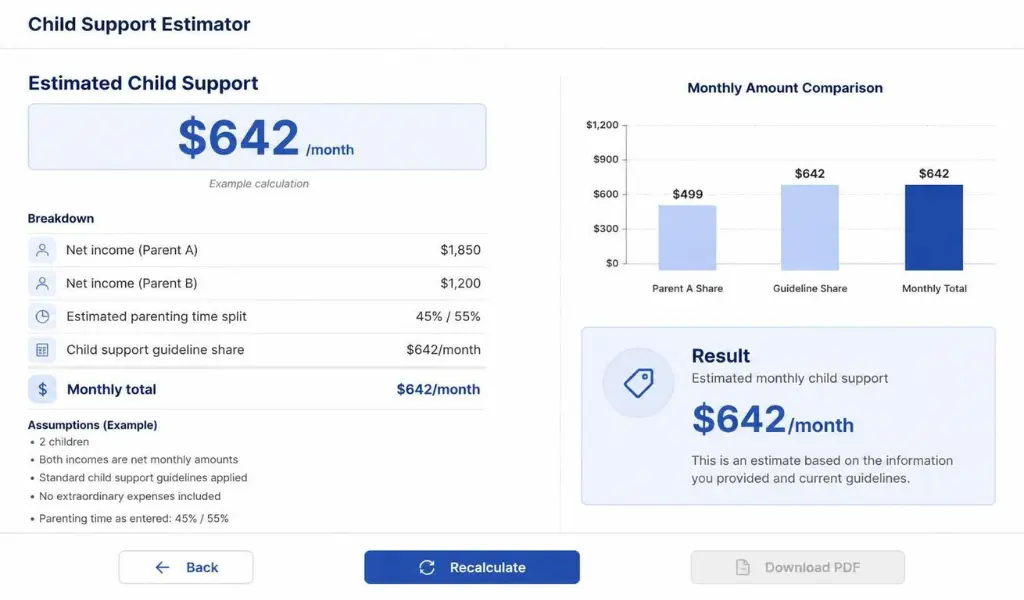
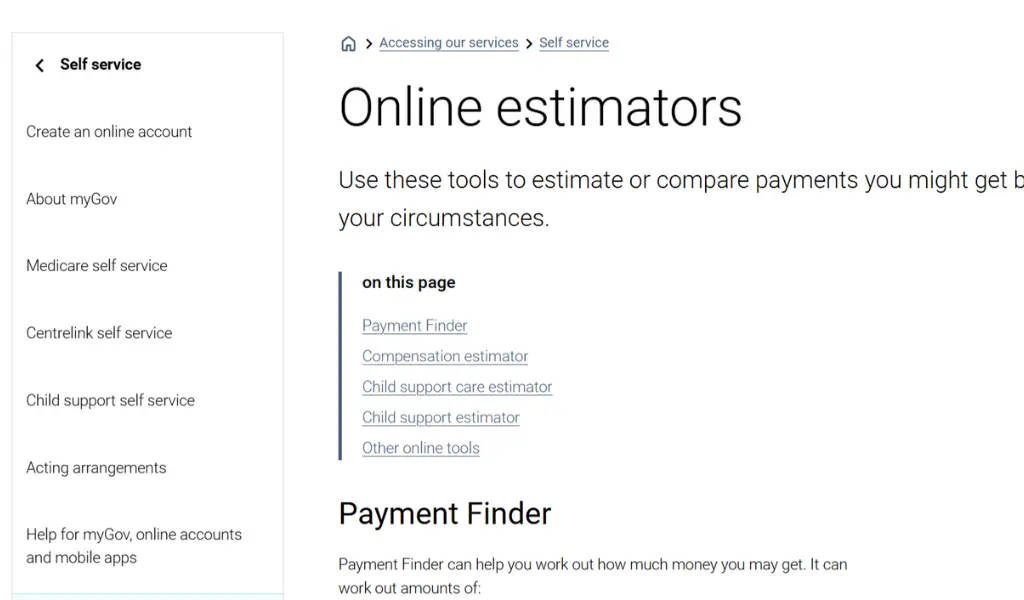
- Go to the Services Australia Child Support Estimator on servicesaustralia.gov.au.
- Enter both parents’ estimated incomes.
- Enter the number of children and their ages.
- Enter the care percentage for each parent.
- Review your estimated child support amount.
This estimate gives you a realistic starting point, though your actual assessment may differ slightly once your income and care details are formally confirmed.
How to Apply for a Child Support Assessment
- Sign in to my.gov.au and select Child Support, or apply directly through Services Australia.
- Provide details about the other parent, your children, and your care arrangement.
- Confirm your income details, which may be based on your latest tax return.
- Services Australia issues a formal assessment based on the formula.
Once assessed, payments are usually collected either privately between parents or through Services Australia’s collection service.
Can Child Support Amounts Change?
Yes. Your child support assessment can change if:
- Either parent’s income changes significantly
- The care arrangement changes, such as more or fewer overnight stays
- A new child is added to either parent’s household
- Either parent requests a change of assessment due to special circumstances, such as high medical costs
Assessments are also automatically updated each year using new income information.
FAQs About Child Support in Australia
Q: Is child support based only on income?
No, income is one major factor, but care percentage, the number of children, and their ages all affect the final amount.
Q: How much is child support for one kid?
There’s no set figure, it depends on both parents’ incomes and care arrangements. Use the official Child Support Estimator for a personalised figure.
Q: Does more overnight care reduce how much I pay?
Generally yes, a higher care percentage for the paying parent typically reduces their child support liability.
Q: Can I calculate child support myself?
You can get a rough estimate using the official Services Australia Child Support Estimator, though your formal assessment may vary slightly based on verified details.
Q: Can a child support amount be disputed?
Yes, either parent can apply for a change of assessment if they believe special circumstances justify a different amount.
Conclusion
Child support in Australia isn’t a flat fee, it’s calculated using a formula based on both parents’ incomes, care arrangements, and the number and ages of the children involved. Using the official Child Support Estimator is the most reliable way to get a realistic figure for your own situation before applying for a formal assessment.