What Is Domestic Violence? Definition & Support in Australia
Domestic and family violence isn’t limited to physical harm. In Australia, it’s recognised as a pattern of behaviour used by one person to control, threaten, or harm a partner, family member, or someone they’re in a close personal relationship with. This guide explains what counts as domestic violence, the different forms it can take, and how Services Australia can support people affected by it.
If you’re in immediate danger, call 000. If you need to talk to someone, Lifeline (13 11 14) and 1800RESPECT (1800 737 732) are available 24/7.
What Is Domestic and Family Violence?
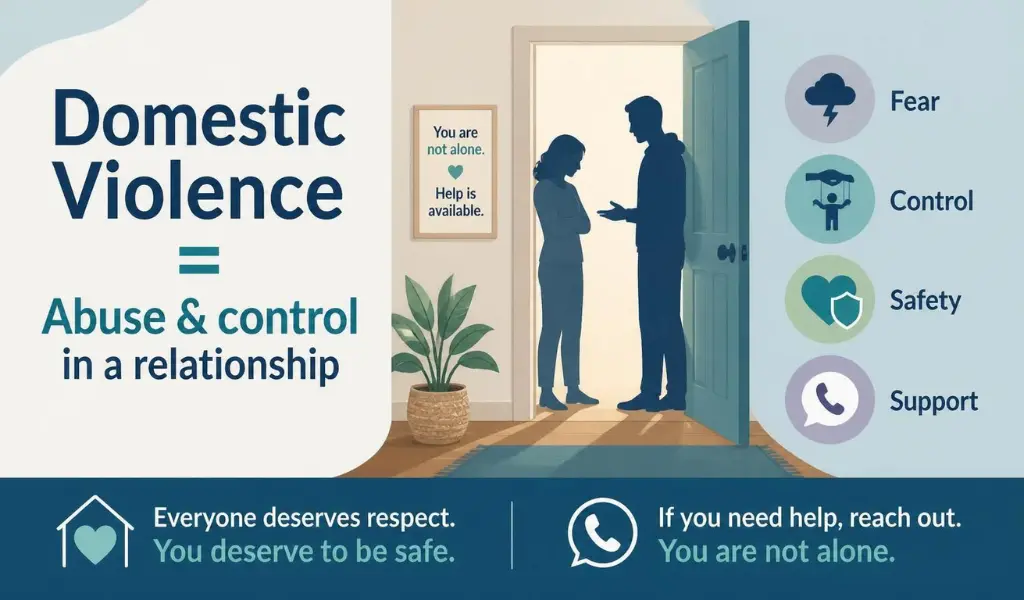
Domestic and family violence refers to behaviour by a person towards a partner, family member, or someone in a close relationship that is violent, threatening, coercive, or controlling, and that causes them to feel fear for their safety or wellbeing. It can happen once, but more often it’s an ongoing pattern of behaviour rather than a single incident.
Under Australian family violence definitions, it can occur between:
- Intimate partners, including current or former spouses or de facto partners
- Family members, such as parents, children, or siblings
- People in other close domestic relationships, such as carers
Does Domestic Violence Have to Be Physical?
No. This is one of the most common misunderstandings. Domestic violence includes physical abuse, but it also includes emotional, psychological, financial, and social forms of abuse. Behaviour doesn’t need to involve physical harm to be considered domestic violence.
Types of Domestic and Family Violence
Physical abuse Hitting, pushing, restraining, or any other behaviour that causes or threatens physical harm.
Emotional and psychological abuse Repeated put-downs, humiliation, threats, intimidation, or behaviour designed to damage a person’s self-worth or sense of safety.
Verbal abuse Yelling, insults, name-calling, or threats used to control or frighten someone. Repeated verbal abuse can be a form of domestic violence, particularly when it’s used to intimidate or control.
Financial abuse Controlling someone’s access to money, preventing them from working, or forcing them into debt or financial dependence.
Coercive control A pattern of controlling behaviour over time, such as monitoring someone’s movements, isolating them from friends and family, or controlling their daily decisions.
Social abuse Deliberately isolating someone from friends, family, or support networks.
Is Yelling or Shouting Considered Domestic Violence?
On its own, a single instance of raised voices isn’t automatically classified as domestic violence. However, if yelling, insults, or intimidation form part of an ongoing pattern used to control or frighten someone, it can be considered verbal or emotional abuse, and therefore part of a domestic violence situation.
Signs of Domestic and Family Violence
Common signs can include a partner or family member:
- Constantly checking up on someone or monitoring their phone, messages, or movements
- Controlling access to money or preventing someone from working
- Isolating someone from friends, family, or support networks
- Using threats, intimidation, or put-downs regularly
- Making someone feel afraid in their own home
- Controlling decisions about everyday life, from finances to who they can see
Family violence can affect anyone, regardless of age, gender, income, or background.
How Services Australia Can Help
Services Australia provides specific support for people experiencing family and domestic violence, separate from general Centrelink payments:
- Crisis Payment – a one-off payment for people facing extreme circumstances, including leaving a violent home
- Priority processing – claims related to family and domestic violence can often be fast-tracked
- Social workers – free and confidential support is available through Centrelink social workers, who can help with safety planning and connecting to other services
- Early release of superannuation – in some circumstances, people affected by family violence may be able to access support related to their financial situation
You don’t need to have already left a violent situation to seek help, Services Australia can provide support while you’re still working out your options.
How to Get Support Through Services Australia
- Call the Centrelink families line or ask specifically to speak with a social worker about your situation.
- Explain that you need help related to family or domestic violence, you don’t need to go into full detail if you’re not comfortable.
- Ask about the Crisis Payment and whether you’re eligible.
- If you need an interpreter, one can be arranged for free.
Staff are trained to handle these conversations sensitively and confidentially.
Other Support Services in Australia
Services Australia can help with payments and financial support, but specialised domestic violence services can offer additional support:
- 1800RESPECT (1800 737 732) – 24/7 national domestic, family and sexual violence counselling and support
- Lifeline (13 11 14) – 24/7 crisis support and suicide prevention
- Police (000) – for immediate danger or emergencies
- Local domestic violence services – many states and territories have local refuges, legal support, and counselling services
FAQs About Domestic and Family Violence
Q: Does domestic violence only happen between partners?
No, it can occur between any family members or people in a close domestic relationship, not only intimate partners.
Q: Is verbal abuse considered domestic violence?
Yes, when it’s part of a pattern used to control, threaten, or intimidate someone, verbal abuse is recognised as a form of domestic violence.
Q: Can I get financial help if I’m leaving a violent relationship?
Yes, Services Australia offers support such as the Crisis Payment and priority processing for people leaving a violent situation. A Centrelink social worker can talk you through your options.
Q: Do I have to go to the police before Centrelink can help me?
No, you can seek support from Services Australia, including speaking with a social worker, without having made a police report.
Q: Where can I get immediate support if I’m not safe?
Call 000 if you’re in immediate danger. For confidential support at any time, 1800RESPECT (1800 737 732) and Lifeline (13 11 14) are both available 24/7.
Conclusion
Domestic and family violence covers a much wider range of behaviour than physical harm alone, including emotional, verbal, financial, and controlling behaviour that causes fear or harm. If this is something you or someone you know is experiencing, support is available, both through Services Australia’s financial and social work assistance, and through specialised services like 1800RESPECT and Lifeline. You don’t have to face it alone, and you don’t need to have all the answers before reaching out for help.
This article discusses domestic and family violence. If it has raised anything difficult for you, please consider reaching out to 1800RESPECT (1800 737 732) or Lifeline (13 11 14), both available 24 hours a day, 7 days a week.